
Reviewed · WALKING TOURS AROUND NICE
NEW TOUR Nice: A Walk through Criminal Past and Heroic Tales
Nice has a dark side worth walking. This tour turns famous streets into a story trail, guided by Evgeniia Odintsova (often called Eugenie) with well-researched true-crime storytelling plus smart added context about the city.
I especially like that the walk mixes notorious villains with real-life heroes, so Nice doesn’t become one-note gloom. The guide also keeps you thinking with quick pauses and questions, not just a one-way lecture. One drawback to plan for: it’s wheelchair accessible, but you’ll still face some stairs in the old town, so strollers and some mobility needs may require extra help.
In This Review
- Key moments that make this tour different
- A Nice walking tour that treats history like a mystery
- Getting the most from Evgeniia Odintsova’s storytelling style
- Price and time: what $29 buys you in real life
- Stop-by-stop route: landmarks you’ll actually stand on
- Casino intrigue on the Riviera: war, heiresses, and an unsolved vanishing
- Belle Époque thieves and the queen of criminals who wasn’t caught
- WWII courage: a network that saved more than 500 Jewish kids
- Medieval heroics: Catherine Ségurane and the washerwoman legend
- The superstar born in Nice: when fame meets disappointment
- Ending at Place Garibaldi: how to use your new Nice perspective
- Should you book? My take on who this fits best
- FAQ
- Where does the tour start?
- How long is the tour?
- Is the tour in English?
- Is the tour wheelchair accessible?
- What stories does the tour cover?
- What are the main booking and cancellation terms?
Key moments that make this tour different
- Start at L’Ange de la Baie and get your bearings on the Promenade
- Casino-era drama at Ruhl Plage, including a scandal and a disappearance
- Belle Époque thieves, including a queen of thieves who evaded capture for 16 years
- WWII rescue stories, featuring a network saved more than 500 Jewish kids
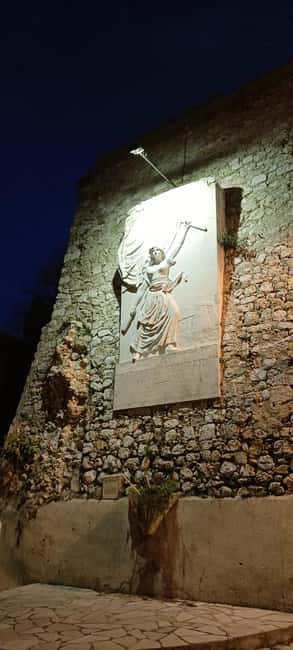
- Medieval heroics at Catherine Ségurane, tied to the bas-relief you’ll stand in front of
- A finish at Place Garibaldi, with practical tips for continuing your Nice day
More of Nice at street level
A Nice walking tour that treats history like a mystery
Most walking tours in Nice will tell you what the buildings are. This one tells you why people acted the way they did.
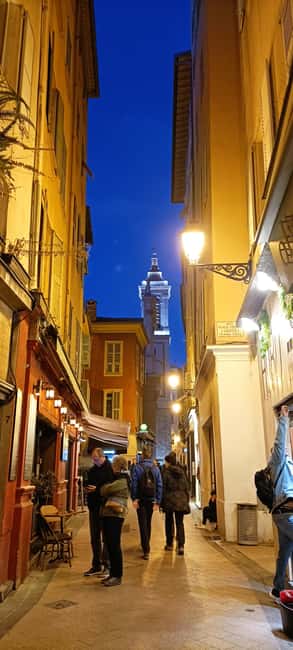
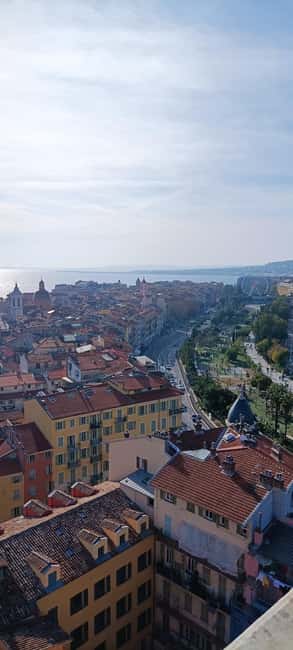
You’ll move from the sea-facing Promenade into the city center and toward the old town, while the guide builds a sequence of stories around crime, courage, and reputation. The pitch is simple: Nice’s past includes daring robbery, unsolved disappearances, and criminals who were either never caught or only partly understood. But it also includes people who took enormous risks to protect others, including during World War II.
What I like is the balance. You’re not stuck in one genre. Yes, there’s a “robbery of the century” led by a very charming criminal. Yes, there’s the mystery of a casino heiress who vanished. But you’ll also hear about a Jewish couple who helped organize a network that saved more than 500 Jewish kids, and a washerwoman legend tied to the city surviving an attack.
That mix matters, because it changes how you read the city around you. On the Promenade, Nice can look like postcards. On side streets and in older squares, it starts to feel more human. People weren’t just living here. They were plotting, hiding, rescuing, and building a city under pressure.
Getting the most from Evgeniia Odintsova’s storytelling style
This is led by Evgeniia Odintsova, and the strongest recurring theme in feedback is the quality of her narration. The stories sound like they were planned, not pulled from a random list.
You can also count on a lively pace. The guide doesn’t just barrel through facts. She tends to pause to check your instincts, asking questions that push you to connect clues and think like someone trying to solve a case. That turns the walk into a light game. You’ll feel more involved than on tours where you mostly listen.
Another plus: you’re not only handed plot. You get city facts and small pointers that help you understand what you’re seeing. That’s why the tour works even if you’re not a true-crime person. If you like places with character and you enjoy piecing together how history actually happened, you’ll enjoy this.
If you do need a little structure, it helps to know the tour’s through-line. It’s organized around major Nice chapters: casino intrigue, Belle Époque thieves, wartime rescue efforts, medieval heroism, and even a story tied to a famous superstar born in Nice and why the hometown didn’t go the way he wanted.
Price and time: what $29 buys you in real life
At $29 per person for 150 minutes, you’re paying for a guided story walk rather than a museum ticket. That’s good value if your time in Nice is limited and you want a quick way to understand how the city evolved.
Two hours and a half is long enough for the guide to build momentum across multiple themes, and short enough that you’re not stuck feeling exhausted at the end. In practice, it’s a great “day starter” tour because it gives you context for the rest of your trip, including where to look for meaning in neighborhoods you’d otherwise just pass through.
You should also consider the walking rhythm. The route is designed to take you from the Promenade toward older streets. The good news is the walk is guided the whole way. The caution is that the old town includes some stairs, and the tour notes that it could be difficult for strollers or wheelchairs without extra help.
If you want to maximize value, wear shoes you can move in comfortably and plan to keep your schedule light afterward. The ending lands at Place Garibaldi, where it’s easy to turn the tour into the next meal stop.
Stop-by-stop route: landmarks you’ll actually stand on
The tour starts at L’Ange de la Baie by Jean-Marie Fondacaro. This is a smart place to begin because it’s a clear landmark on the Promenade. You start with sea air, bright city energy, and a guide who sets the tone: you’re about to read Nice through crime-and-hero stories.
From there you head along the Promenade area, including Ruhl Plage. This is where the tour’s casino-era chapter becomes very relevant. Even if you only know Nice as beaches and hotels, this stop nudges you toward the idea that the city also had wealth, gambling, and high stakes. That’s the background for the daring robbery topics and the still-mysterious disappearance of the casino heiress.
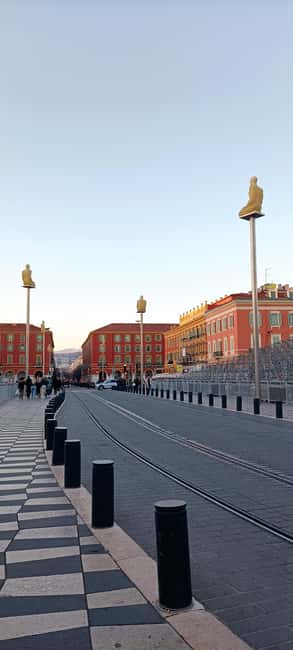
Next, you’ll move past the Fountain of the Sun, then toward Pharmacie Mercier Aprium and SG. These stops are useful because they keep you in motion while the guide layers in different parts of Nice’s story. This is where the tour blends eras, so you get Belle Époque glamour next to later wartime stakes. It’s also where you’ll start noticing how different parts of town feel like different chapters of the same book.
Then you arrive at Palais de Justice, Nice. Court buildings tend to do one thing well: they make the theme of justice feel real. Expect the guide to connect the places you’re standing in to the people and networks involved in the tour’s bigger narratives, including both criminals and those who fought back through sacrifice.
After that, you’ll see the Bas-relief Catherine Ségurane. This is one of the most important stops for the “hero” side of the tour. Catherine Ségurane is tied to the story of a washerwoman from the Middle Ages who helped save the city from an attack led by two famous commanders. Standing in front of the bas-relief gives that legend a physical anchor.
Finally, the walk ends at Place Garibaldi. This closing point works well because it’s a natural place to decompress. You’ll finish with a broader sense of Nice’s identity, not just a list of crimes. After the tour, you can keep exploring the center and old town with a better eye for what you’re looking at.
Casino intrigue on the Riviera: war, heiresses, and an unsolved vanishing
One of the tour’s biggest draws is the casino era. The stories center on the most famous casino-related conflict in France and the shocking disappearance of the heiress of rich casino owners, a case that remains a mystery.
Why this matters on a walk like this is simple: Nice’s glamour is real, but it has always come with incentives and dangers. Casino wealth brings people who want money fast, and it attracts both con artists and organized criminals. When you hear about the crime, you also start to understand the city’s social machinery: who had access, who had leverage, and who disappeared when the stakes got too high.
This is also a good chapter for first-time visitors because it turns “I’ve seen that neighborhood” into “I understand why those stories belong here.” You’re not just collecting facts. You’re learning how a place can create both opportunity and risk.
Pay attention to the guide’s framing. The tour isn’t only about what happened. It’s about how rumors spread, how reputations are built, and how a mystery can outlast the people who tried to solve it.
Belle Époque thieves and the queen of criminals who wasn’t caught
Another major theme is the Belle Époque era. This is where the tour shifts into the kind of story that feels almost cinematic: a queen of thieves who robbed wealthy aristocrats during the Belle Époque and could not be caught for 16 years.
This part is more than just a costume change to gold-and-gloves vibes. It adds a lesson about how societies protect wealth. If aristocrats get targeted, it means their world has weak points. It also means the criminals involved weren’t only stealing. They were exploiting the confidence that comes with privilege.
The tour also includes a “robbery of the century” led by a very charming criminal. That combination is important: the guide isn’t presenting thieves as cartoon villains. She presents them as people who understood psychology, performance, and timing. You’ll be looking at the streets and thinking about how someone could move, hide, and strike before anyone could respond.
If you like mysteries that hinge on motive and method, this is your strongest segment.
- From Nice: French Riviera in One Day
★ 4.5 · 6,719 reviews - From Nice: Eze, Monaco, & Monte-Carlo Half-Day Trip
★ 4.5 · 5,642 reviews - Nice: 1-Hour Sightseeing Cruise to Villefranche Bay
★ 4.6 · 2,747 reviews - Nice: Gorges of Verdon and Fields of Lavender Tour
★ 4.5 · 2,707 reviews - Nice: 1 or 2-Day Hop-On Hop-Off Bus Tour
★ 4.3 · 2,663 reviews
WWII courage: a network that saved more than 500 Jewish kids
The tour takes a sharp turn into World War II. One story focuses on a Jewish couple who risked their lives to organize a network that saved more than 500 Jewish kids.
What I like about including this theme in a “criminal past” tour is that it balances the moral math. Yes, you hear about robbery and deception. But you also hear about rescue, organization, and sacrifice. That makes the tour feel more grounded and human.
It also helps you connect the city’s elegance to its vulnerability. Nice’s beauty didn’t prevent danger. People still needed help, and in many cases, help depended on networks—neighbors, planners, and people willing to do something dangerous for strangers.
Even though this section is emotionally heavier than the casino stories, it doesn’t feel like it’s just for shock value. It’s structured to keep you moving through the city while understanding how wartime realities shaped what people did next.
Medieval heroics: Catherine Ségurane and the washerwoman legend
Then you hit the older layer: a washerwoman from the Middle Ages who saved Nice from an attack led by two famous commanders. This is the tour’s “legend meets place” moment, tied to the Bas-relief Catherine Ségurane stop.
Why this works on a walking route is because it anchors myth in stone. Instead of hearing a legend floating in the air, you’re shown a specific monument that keeps the story visible. It also adds a clever theme contrast: in earlier chapters, people chase money or evade capture. Here, the story is about protecting the city itself.
Washerwomen legends can sound small until you understand how hard life was. Cloth, water, and daily routines were part of the city’s survival system. In stories like this, a person who looks ordinary becomes the hinge that changes the outcome.
If you pay attention at this stop, you’ll come away with a better idea of how Nice built its identity not only through kings and commanders, but through the people whose names survived through story.
The superstar born in Nice: when fame meets disappointment
The walk also includes a story about the most famous superstar ever born in Nice and why the fate of his hometown was a disappointment in his life.
This is brief compared to the larger crime and rescue chapters, but it adds something valuable. It reminds you that the city’s reputation doesn’t only come from what criminals did or what heroes prevented. It also comes from who was born here and what they felt afterward.
When you hear this part of the tour, look around with that in mind. Nice might seem set up for a certain kind of success, but success changes people. And if the hometown didn’t deliver what the superstar hoped, it becomes part of Nice’s modern tension: beauty versus opportunity, image versus reality.
Even if you don’t know the figure yet, the story is still useful because it frames the city’s modern identity as something shaped by expectations.
Ending at Place Garibaldi: how to use your new Nice perspective
Finishing at Place Garibaldi is a practical choice. The square gives you room to reset your brain after 150 minutes of stories. It also sets you up to keep exploring with a fresh lens.
By the end, you’ve gone through a timeline that includes:
- casino-era scandals and a disappearing heiress
- Belle Époque theft and a thief who avoided capture for 16 years
- a “robbery of the century” led by a charming criminal
- WWII rescue efforts that saved more than 500 Jewish kids
- medieval heroism connected to Catherine Ségurane
That timeline matters because it teaches you how Nice’s identity changes with time, but also how certain themes repeat. Wealth attracts predators. Crisis forces networks to form. Legends survive when people need meaning.
Now you can walk the center and old town differently. You’ll notice details you’d normally ignore, and you’ll understand why certain stories were worth remembering.
Should you book? My take on who this fits best
Book this tour if you want a walking tour in Nice that feels like a story you can walk through, not a slow parade of facts. It’s a strong fit for people who enjoy true-crime themes, but it’s also balanced by real heroism, including wartime rescue and medieval legend.
You might skip it if you have limited ability to handle old-town steps or if you rely heavily on a stroller or wheelchair without extra help. The tour is listed as wheelchair accessible, but the walk still includes stairs, so plan accordingly.
If you’re on a short trip and want a high-impact way to learn what makes Nice more than postcard scenery, this is a smart use of 150 minutes. Just bring comfortable shoes and show up ready to pay attention, because the guide’s best tricks are the pauses where you get to think before the next twist.
FAQ
Where does the tour start?
Meet at L’Ange de la Baie by Jean-Marie Fondacaro, at the English Promenade opposite the Palais de la Mediterranee (Hyatt Hotel, Partouche casino), next to the sculpture The Angel of the Bay.
How long is the tour?
The duration is 150 minutes.
Is the tour in English?
Yes. The tour is offered in English with a live guide.
Is the tour wheelchair accessible?
The tour is listed as wheelchair accessible, but it includes some steps in the old town, so it may be difficult for strollers or some wheelchairs without additional help.
What stories does the tour cover?
You’ll hear about a casino-related conflict and a mystery disappearance, the Belle Époque queen of thieves, a robbery of the century, a WWII rescue network that saved more than 500 Jewish kids, the Catherine Ségurane washerwoman legend, and a story about a famous superstar born in Nice, plus broader city history and culture.
What are the main booking and cancellation terms?
You can reserve now and pay later, and you can cancel up to 24 hours in advance for a full refund.
More Tour Reviews in Nice
- From Nice: French Riviera in One Day★ 4.5 · 6,719 reviews
- From Nice: Eze, Monaco, & Monte-Carlo Half-Day Trip★ 4.5 · 5,642 reviews
- Nice: 1-Hour Sightseeing Cruise to Villefranche Bay★ 4.6 · 2,747 reviews
- Nice: Gorges of Verdon and Fields of Lavender Tour★ 4.5 · 2,707 reviews
- Nice: 1 or 2-Day Hop-On Hop-Off Bus Tour★ 4.3 · 2,663 reviews
Nice, One Street at a Time
- ★ Walking Tour of Old Nice and Castle Hill★ 5.0 · 1,318 reviews
- Nice Small-Group Walking Food Tour with Local Specialties & Wine Tasting★ 4.5 · 558 reviews
- Nice: Food and Wine Old Town Guided Walking Tour★ 4.9 · 411 reviews
- Nice: Old Town Treasures Walking Tour★ 4.6 · 388 reviews
- Nice: Old Town & Castle Hill Informative Guided Walking Tour★ 4.9 · 248 reviews
Newly Reviewed Along the Riviera






Walking Tours Around Nice, compared.
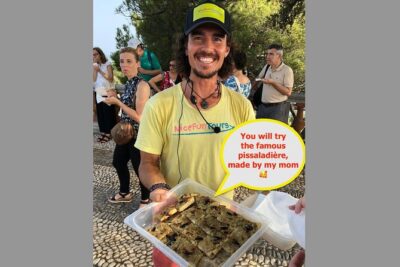 ★ 5.0★ Walking Tour of Old Nice and Castle HillFrom $391,318 reviews
 ★ 4.5Nice Small-Group Walking Food Tour with Local Specialties & Wine TastingFrom $97558 reviews
 ★ 4.9Food and Wine Old Town Guided Walking TourFrom $99411 reviews
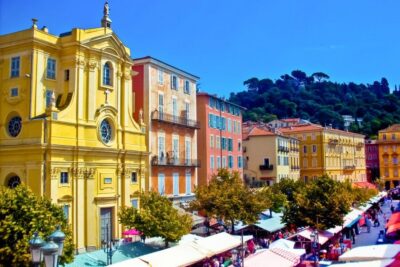 ★ 4.6Old Town Treasures Walking TourFrom $34388 reviews
 ★ 4.9Old Town & Castle Hill Informative Guided Walking TourFrom $33248 reviews
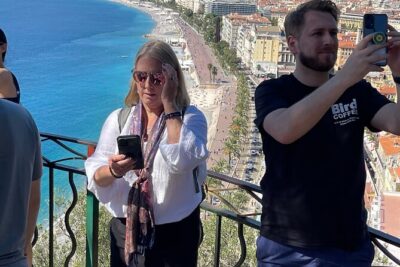 ★ 5.0Walking tour of Nice, the old town & the Coline du ChâteauFrom $30200 reviews
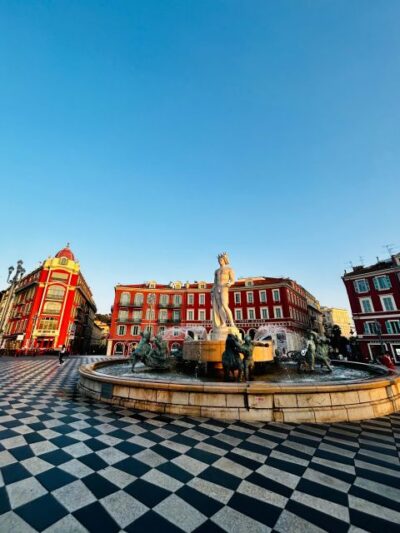 ★ 4.7Guided Walking Tour in EnglishFrom $36197 reviews
 ★ 5.0Half Day Afternoon Walking Food Tour with DinnerFrom $181165 reviews
Browse the lists this tour appears in