
Reviewed · HISTORICAL TOURS
Jewish Heritage Tour of Nice
Nice has a Jewish story hiding in plain sight. On this private walking tour, a historian guide threads medieval Nice to today, using streets, buildings, and memorials to help you read the city like a map. You set the pace, and you can ask questions as you go.
I especially liked the care of the guide. In practice, that means a guide like Robert Levitt brings meticulous, street-level detail and a warm, personable style that makes the facts feel human. You’ll also get time focused on the community itself, including stops tied to both Ashkenazi and Sephardi synagogue life when access allows.
One thing to weigh first: it’s a walking route with steps and uneven pavements in Vieux Nice, plus the tour is aimed at adults and older children (14+). If mobility is a concern, the visit may be shortened, depending on how the route is handled.
In This Review
- Key points to know before you go
- Why Jewish Nice feels personal from the first street corner
- The private historian guide: what you’re really paying for
- Timing, meeting area, and how the 3-hour format plays out
- The Jewish ghetto area: learning from streets, not just plaques
- Mur des Justes and memorial stops: walking with memory
- Synagogues and the cemetery: access, atmosphere, and the right kinds of questions
- Judeo-Spanish (Ladino) threads and the language side of heritage
- Price and value: what $678.45 buys you (and when it’s a smart deal)
- Who should book this Jewish Heritage Tour of Nice
- Practical tips that will make your 3 hours smoother
- Should you book this Jewish Heritage Tour of Nice?
Key points to know before you go
- Private guide, walk at your pace: you’re not stuck in a group rhythm.
- Medieval focus with modern context: the story is chronological, but it also explains what you see today.
- Synagogues and cemetery stops (often with access): you get more meaning than a quick exterior pass.
- Mur des Justes and memorial sites: the route connects place to memory.
- Judeo-Spanish (Ladino) angle when possible: you may hear how language carried community identity.
- Expect steps and uneven ground: good shoes matter, especially around Vieux Nice.
Further back into the history of Nice
Why Jewish Nice feels personal from the first street corner
Jewish heritage in Nice isn’t one monument you can photograph and call it done. It’s a trail of neighborhoods, buildings, and memorials that show up in the urban fabric over time. That’s why this tour works: you’re not just learning dates. You’re learning what those dates built—and what survived.
The best part is how the guide helps you notice details you’d normally miss. A façade becomes a clue. A turning street becomes a way to understand where community life clustered. The tour also holds your questions in the middle of the walking, not at the end, so you can steer your own learning.
You’ll also notice that Nice is a city of layers. Medieval-era references aren’t treated like trivia; they’re used to explain why later events and identities mattered. Even if you know a little already, you’ll walk away with a clearer sense of how the community’s story fits into the wider city story.
The private historian guide: what you’re really paying for
The headline feature is simple: a private historian guide. But what makes it worth real money is the way the guide can shape the route and your pace. This isn’t a scripted march where you follow someone’s headcount. It’s a conversation on foot.
In the best-run versions of this experience, the guide is Robert Levitt—and the standout theme in the praise is how he blends serious research with a friendly, “you can ask me anything” approach. The result is that history doesn’t stay abstract. You hear why a place matters and how the facts connect to what stands in front of you.
Another value point: the tour is designed for adult-focused historical depth, with time for questions. That matters because Jewish heritage sites in Nice can be sensitive and complex. A good guide helps you hold complexity without getting lost in it.
Timing, meeting area, and how the 3-hour format plays out
This is a 3-hour walking tour. That’s enough time to see multiple key stops—ghetto-linked sites, memorial walls, synagogue-related areas, and cemetery ground—without rushing you through everything like a coffee run.
You’ll start in Nice and finish back at the meeting point, so you don’t have to think about logistics during the walk. The route is built around neighborhoods near public transportation, which is handy if you’re combining the tour with other sightseeing.
The pace is “at your pace,” but you should still plan for walking with some stairs and uneven pavement. Bring realistic expectations: this is a city-walking experience where you’ll be on your feet. Moderate physical fitness is the baseline ask, and some areas may be abbreviated if mobility is limited.
The Jewish ghetto area: learning from streets, not just plaques
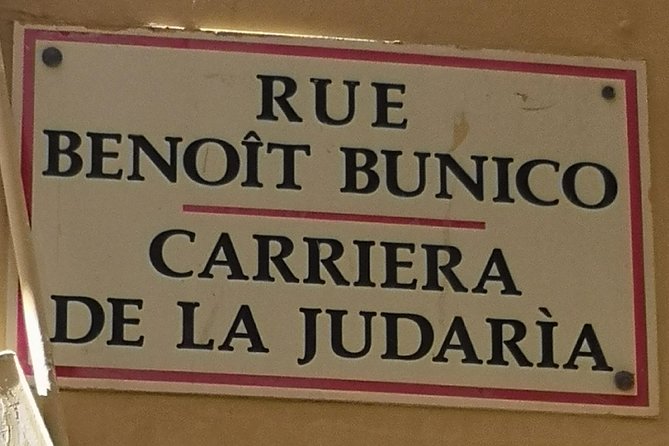
One of the first stops centers on the Jewish ghetto area. This is where the tour’s storytelling starts to click. A ghetto isn’t just a concept; it’s a spatial reality. You’ll walk through parts of Vieux Nice and learn how community life formed in response to restrictions, protection, and civic change.
The guide’s job here is to help you read the street layout and the urban logic behind it. You’ll likely hear explanations that connect medieval-era context to what comes later—so you understand why certain community institutions clustered where they did.
Drawback to consider: if you’re hoping for a single “ghetto building” to visit like a museum, you may find it’s more about the streets and their meaning. That’s not a flaw. It’s the point. Nice’s Jewish story often lives in the city structure itself.
Mur des Justes and memorial stops: walking with memory
Later in the walk, you’ll encounter memorial space tied to the theme of rescuers and justice—known as the Mur des Justes. Stops like this are emotionally heavier than the synagogue corridors or neighborhood streets. The value is that you’re not just seeing a memorial. You’re learning what the memorial is trying to hold, and how that story fits the broader community history.
A strong guide also helps you keep context without turning it into a lecture. You’ll have time to ask questions while you walk, which is useful because memorial interpretation can be personal. One person wants dates; another wants to know the human side.
Practical note: memorial areas can involve stairs or uneven ground, especially in older sections of Nice. If you need to move more slowly, the private setup helps—you can take breaks without feeling like you’re slowing a whole group.
Synagogues and the cemetery: access, atmosphere, and the right kinds of questions
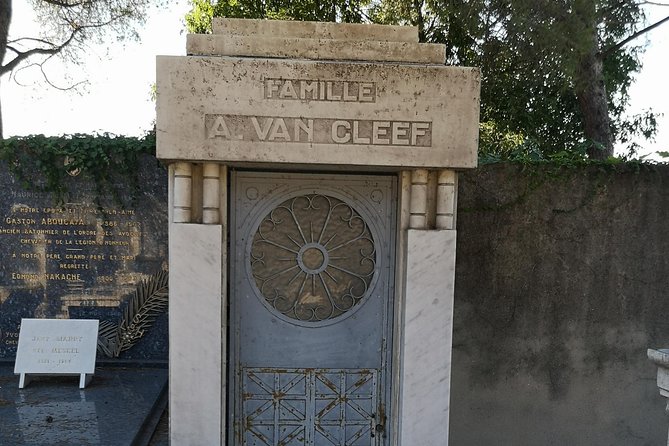
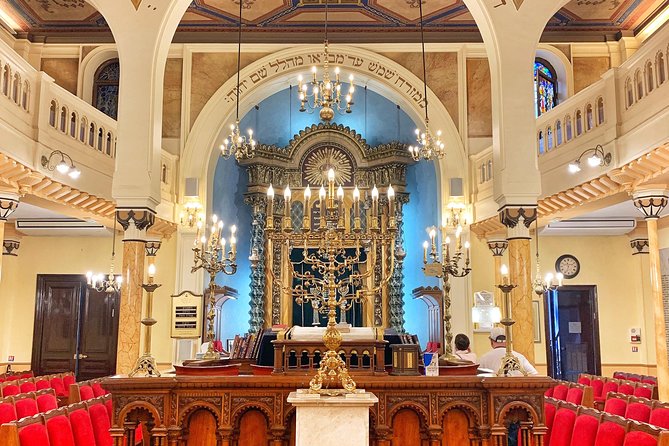
This tour’s heart is the set of stops tied to synagogue life and Jewish burial history. Depending on access conditions, you may be able to visit synagogues, including both Ashkenazi and Sephardi communities. One of the most praised elements of the experience is that the guide can arrange access where possible, instead of treating synagogues as only exterior sightseeing.
Why this matters: a synagogue visit can change the whole feel of what you learned. When you see the space, the historical story stops being something you only “know.” It becomes something you can stand inside and respect.
The cemetery stop is also a major moment. You’ll learn how the cemetery connects memory to identity, and you’ll likely understand how burial traditions helped preserve community continuity across generations and upheavals. Expect some steps and uneven ground here too, so wear shoes you’d use for a long walk.
What to ask your guide while you’re there:
- How did community identities (like Ashkenazi vs. Sephardi) shape life in Nice?
- What details in the space or location reflect that identity?
- How do medieval roots connect to later events in the city?
You’ll get better answers because the guide has time—and because the tour is built for questions, not just observation.
- From Nice: French Riviera in One Day
★ 4.5 · 6,719 reviews - From Nice: Eze, Monaco, & Monte-Carlo Half-Day Trip
★ 4.5 · 5,642 reviews - Nice: 1-Hour Sightseeing Cruise to Villefranche Bay
★ 4.6 · 2,747 reviews - Nice: Gorges of Verdon and Fields of Lavender Tour
★ 4.5 · 2,707 reviews - Nice: 1 or 2-Day Hop-On Hop-Off Bus Tour
★ 4.3 · 2,663 reviews
Judeo-Spanish (Ladino) threads and the language side of heritage
One of the tour’s more interesting angles is the chance to encounter communities connected to the Judeo-Spanish dialect, often called Ladino. If it’s possible during your visit, this adds a different kind of context. History isn’t only architecture and dates. It’s also language—how people expressed faith, daily life, and memory.
Even when you don’t get a “language lesson,” the guide can use language as a lens. You’ll likely hear how Jewish languages helped maintain continuity and identity in a European city that has always been multilingual.
Best approach for you: listen for the practical meaning. Language here isn’t a fun trivia item. It’s part of how a community kept its voice across time.
Price and value: what $678.45 buys you (and when it’s a smart deal)
The price is $678.45 per group (up to 8) for about 3 hours. On the surface, that’s a lot. But the value math changes fast when it’s private.
Think of it this way: you’re paying for a historian guide, a route designed around Jewish heritage sites, and the flexibility to ask questions. If you’re traveling as a couple, it often works out similarly to what two people might pay for a top-tier guided experience, except you’re not competing with strangers for the guide’s attention. If you have a small group, the per-person cost drops quickly.
Another quiet value point: admission is listed as free for the included ticketed elements. That means you’re not facing a stack of museum fees on top of the guide cost.
If you like your history with context—street-level, site-based, and human—you’ll feel like this price buys time and access, not just narration.
Who should book this Jewish Heritage Tour of Nice
This is best for you if you want Jewish heritage to be more than a checklist. You’ll enjoy it most if you like walking tours that explain why places matter and you’re comfortable covering some distance on foot.
It’s aimed at adults and older children (14+), so it’s not the right pick if you’re traveling with younger kids who need a more hands-on, short-attention format.
Book it if:
- You want a private historian instead of a crowded group.
- You care about medieval-to-modern continuity, not only modern landmarks.
- You’re interested in both Ashkenazi and Sephardi community connections when access allows.
- You like asking questions as you walk, because the guide’s answers are part of the experience.
You might skip or adjust your plan if mobility is limited. The tour involves stairs and uneven pavement, and some areas may be abbreviated. If you’re unsure, it’s worth asking before you commit so you can match the route to your needs.
Practical tips that will make your 3 hours smoother
Bring comfortable walking shoes. Vieux Nice has uneven pavement, and memorial or cemetery areas may include stairs.
Dress for the weather. The tour needs good conditions, and if weather is bad, you may be offered a different date or a full refund. If you’re visiting in a season with sudden rain, keep your schedule flexible when possible.
Plan your question style. You’ll get more out of the tour if you come with a few angles, even simple ones like what changed over time or how a specific place connects to community life.
Also remember: some areas may be unavailable on Chabbat, Jewish holidays, and French holidays, so you might not see everything exactly every day. That’s one reason private guiding is helpful—you can still get a meaningful route even when access shifts.
Should you book this Jewish Heritage Tour of Nice?
If you want an honest, place-based history tour that respects the subject and gives you time to ask real questions, I’d say yes, book it. The best reason is the human one: the guide approach is a major part of the value, and the most praised element is the guide’s depth and attention to detail—plus the ability to arrange synagogue access when possible.
I’d skip it only if you already know the story very well and you’re not interested in walking the neighborhoods and memorial sites. Or if mobility and stairs are an issue, you’ll likely feel rushed even though it’s private.
For most people who want to understand Jewish Nice in a grounded, thoughtful way, this tour is one of the more satisfying uses of a few hours in the city.
Old Stones of the County of Nice
- From Nice: Historic Train Ride & Alps Villages★ 4.8 · 312 reviews
- Nice : Wine Tasting at a Historic Château in a Land Rover !★ 4.9 · 156 reviews
- Nice: Sunset & Wine Tasting in a historic Land Rover★ 5.0 · 91 reviews
- Nice: Theatrical History Tour – Secrets of the Castle Hill★ 5.0 · 21 reviews
- Nice: Exclusive Private Guided Tour of Historic Center★ 4.5 · 13 reviews
More Tour Reviews in Nice
- From Nice: French Riviera in One Day★ 4.5 · 6,719 reviews
- From Nice: Eze, Monaco, & Monte-Carlo Half-Day Trip★ 4.5 · 5,642 reviews
- Nice: 1-Hour Sightseeing Cruise to Villefranche Bay★ 4.6 · 2,747 reviews
- Nice: Gorges of Verdon and Fields of Lavender Tour★ 4.5 · 2,707 reviews
- Nice: 1 or 2-Day Hop-On Hop-Off Bus Tour★ 4.3 · 2,663 reviews
Newly Reviewed Along the Riviera





Historical Tours, compared.
 ★ 4.8Historic Train Ride & Alps VillagesFrom $200312 reviews
 ★ 4.9Wine Tasting at a Historic Château in a Land Rover !From $79156 reviews
 ★ 5.0Sunset & Wine Tasting in a historic Land RoverFrom $7691 reviews
 ★ 5.0Theatrical History Tour – Secrets of the Castle HillFrom $3421 reviews
 ★ 4.5Exclusive Private Guided Tour of Historic CenterFrom $21713 reviews
 ★ 4.0All-Inclusive Culinary and History Tour of Old Nice with a LocalFrom $1775 reviews
Browse the lists this tour appears in